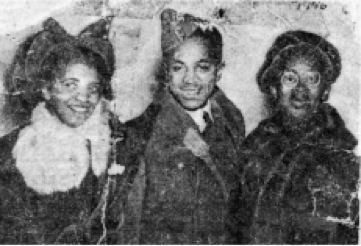
The uniting of families through marriage achieved great interest with the marriages in Oakville of three Wayner brothers to three Johnson sisters. Lorenzo Wayner and Martha Johnson were to play significant roles in the continuation of the Turner Chapel
The uniting of families through marriage achieved great interest with the marriages in Oakville of three Wayner brothers to three Johnson sisters. Lorenzo Wayner and Martha Johnson were to play significant roles in the continuation of the Turner Chapel
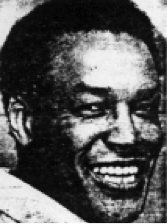
Oakville was sometimes the home of choice for African Canadians whose families initially moved to other areas in Canada on the Underground Railroad.Gene “Clay” Bonner was a member of Canada’s Olympic boxing team at the 1924 Paris Games, entered
Today, in the year 2000, the Duncan Family is the only family living in the Oakville community whose history extends directly back to the Underground Railroad. Isabella Adams and Alexander Duncan had six children: sons Urban and Alvin and
Other well-known African Americans from Oakville include John C. Holland, the son of slaves, who became a pastor in Hamilton. He established such a reputation for helping others in need that the “The John C. Holland Award” was established
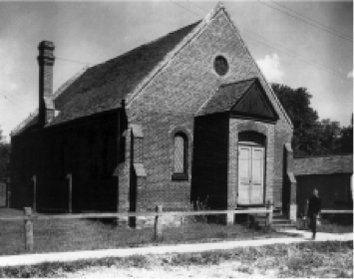
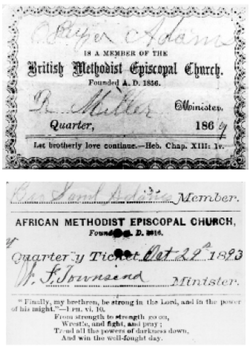
The Turner African Methodist Episcopal Church was built in 1891 and opened under Reverend William Roberts in 1892. The congregation included African Americans from Oakville and Bronte, and united members of the British Methodist Episcopal and African Methodist Episcopal
This exhibit on Oakville's Black History was developed in honour of the Nathaniel Dett Chorale's performance at the Oakville Centre on Sunday February 6th, 2000.The Nathaniel Dett Chorale was inspired and named after Nathaniel Dett, a celebrated composer who
In the early days when Samual Adams and Rev. William Butler were first organizing the church, there were reported to be between 600 and 700 African Americans in the Oakville and Bronte area. Following Abraham Lincoln's abolition of slavery
Samuel Adams, a free African American from Cantonsville, Maryland, came to Bronte in 1855 with his son Jeremiah. With $800.00 in gold from his successful business in Maryland, Adams opened a blacksmith shop. He was kept very busy in